新書推薦:

《
自恋主义文化
》
售價:NT$
398

《
我是异类,你是怪物
》
售價:NT$
301

《
深夜的恋人们
》
售價:NT$
332

《
治未病常用中医外治法辑要
》
售價:NT$
449
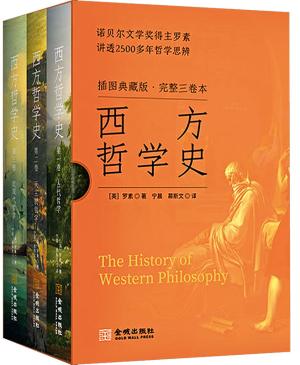
《
西方哲学史:插图典藏版
》
售價:NT$
918

《
流血的仕途:李斯与秦帝国(全二册2026版)
》
售價:NT$
545

《
珠宝首饰设计手绘与表现技法
》
售價:NT$
653
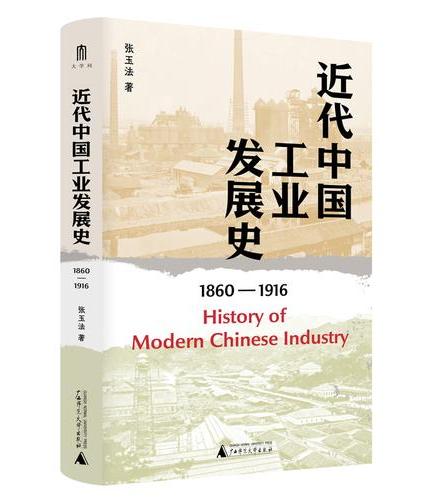
《
大学问·近代中国工业发展史(1860—1916)(著名历史学家张玉法先生学术代表作)
》
售價:NT$
403
|
| 內容簡介: |
Low-volatility gases (LVGs) are increasingly recognized as critical contributors to atmospheric pollution and industrial operational challenges. Their low vapor pressures, strong surface affinities, and intrinsic toxicity enable them to participate in secondary particulate formation, while also causing condensation, fouling, and corrosion in emission systems. These dual environmental and engineering impacts highlight the need for effective purification technologies grounded in robust scientific understanding. This book delivers a unified treatment of LVG capture by adsorption, linking porous-material design with adsorption thermodynamics, kinetic models, and mass-transfer phenomena. It explains how pore architecture, surface functionality, and diffusion constraints determine selectivity and capacity, and it treats desorption and regeneration as integral to process sustainability and cos-t effectiveness. The text integrates molecular simulation and multiscale modeling as tools to reveal adsorption sites, interaction energies, and diffusion pathways, thereby informing rational adsorbent design. Case studies and process-level discussions translate these insights into engineering strategies for flue-gas treatment, incineration off-gas control, nuclear fuel reprocessing, and other industrial scenarios. Combining fundamentals, modeling, materials, and applications, the book is a concise technical reference for researchers and engineers tackling LVG purification and adsorption-based gas treatment.
This book can serve as a reference for researchers and engineers engaged in gas adsorption separation research and applications, as well as a teaching material for teachers and students in related majors at higher education institutions.
|
| 目錄:
|
Chapter 1 Overview of Low-Volatile Gas 001
1.1 Characteristics of Low-Volatile Gas 001
1.2 Sources and Hazards of Low-Volatile Gas 005
1.3 Purification Technologies for Low-Volatile Gas 006
References 009
Chapter 2 Overview of Adsorption Purification Technology 011
2.1 Principles and Fundamentals of Adsorption Technology 011
2.2 Adsorption Phase Equilibrium 012
2.3 Adsorption Kinetics 016
2.4 Desorption Characteristics 019
References 021
Chapter 3 Overview of Adsorbents 024
3.1 Concept of Adsorbents 024
3.2 Microporous Adsorbents 025
3.2.1 Activated Carbon and Other Microporous Carbon Materials 025
3.2.2 Alumina 030
3.2.3 Silica Gel 031
3.2.4 Resins 031
3.2.5 Zeolites 031
3.3 Mesoporous Adsorbents 035
3.3.1 Ordered Mesoporous Silica 036
3.3.2 Ordered Mesoporous Carbon 039
3.3.3 Disordered Mesoporous Carbon 044
References 056
Chapter 4 Adsorption Equilibrium of Low-Volatility Gases on Adsorbent Materials 060
4.1 Relevant Experimental Methods 060
4.1.1 Gas-Phase PAHs Adsorption Experiments 060
4.1.2 Dioxin Adsorption Experiment 062
4.2 Adsorption Equilibrium of Low-Volatility Gases on Microporous Adsorbents 064
4.2.1 Adsorption Equilibrium of Gaseous PAHs on Microporous Adsorbents 064
4.2.2 Adsorption Equilibrium of Dioxins on Microporous Adsorbents 069
4.3 Adsorption Equilibrium of Low-Volatility Gases on Mesoporous Adsorbents 072
4.3.1 Adsorption Equilibrium of Gaseous PAHs on Ordered Mesoporous Adsorbents 072
4.3.2 Adsorption Equilibrium of Gaseous PAHs on Disordered Mesoporous Adsorbents 082
4.4 Factors Affecting Adsorption Equilibrium 084
References 087
Chapter 5 Adsorption Kinetics of Low-Volatility Gases on Adsorbent Materials 089
5.1 Related Experimental Methods 089
5.1.1 Axial Diffusion Adsorption Model 089
5.1.2 LDF Kinetic Model 091
5.1.3 Constant Concentration Wave Kinetic Model 092
5.1.4 Estimation of Adsorption Kinetic Parameters 093
5.2 Adsorption Kinetics of Low-Volatility Gases on Microporous Adsorbents 094
5.2.1 Adsorption Kinetics of Gas-Phase PAHs on Ordered Microporous Adsorbents 094
5.2.2 Adsorption Kinetics of Dioxins on Microporous Adsorbents 102
5.3 Adsorption Kinetics of Low-Volatility Gases on Mesoporous Adsorbents 104
5.3.1 Adsorption Kinetics of Gas-Phase PAHs on Ordered Mesoporous Adsorbents 104
5.3.2 Adsorption Kinetics of Gas-Phase PAHs on Disordered Mesoporous Adsorbents 118
References 120
Chapter 6 Desorption Characteristics of Low-Volatility Gases on Adsorption Materials 122
6.1 Relevant Experimental Methods 122
6.1.1 Temperature-Programmed Desorption (TPD) Experimental Method 122
6.1.2 Desorption Kinetic Analysis Method 124
6.2 Microporous Adsorbents 127
6.2.1 Desorption Characteristics of Gas-Phase PAHs on Microporous Adsorbents 127
6.2.2 Desorption Characteristics of Dioxins on Microporous Adsorbents 143
6.3 Mesoporous Adsorbents 146
6.3.1 Desorption Characteristics of Gas-Phase PAHs on Ordered Mesoporous Adsorbents 146
6.3.2 Desorption Characteristics of Gas-Phase PAHs on Disordered Mesoporous Adsorbents 164
References 175
Chapter 7 Adsorption Mechanism Based on Molecular Simulation 178
7.1 Relevant Experimental Methods 178
7.1.1 Grand Canonical Monte Carlo (GCMC) Method 179
7.1.2 Molecular Dynamics (MD) Method 182
7.1.3 Density Functional Theory (DFT) 184
7.2 Adsorption of PAHs on Mesoporous Silica-Based Models:GCMC and MD Simulation 187
7.2.1 Kinetic Simulation of PAHs Adsorption on Mesoporous Silica-Based Models 187
7.2.2 Thermodynamic Simulation of PAHs Adsorption on Mesoporous Silica-Based Models 192
7.2.3 Model Validation and Adsorption Performance of PAHs 198
7.2.4 Adsorption States of PAHs on Mesopore Models 205
7.3 DFT Simulation on the Adsorption of PAHs on Silica-Based Mesoporous Models 212
7.3.1 DFT Computational Simulation 212
7.3.2 Adsorption Configuration of PAHs 215
7.3.3 Interactions Between PAHs and Silica-Based Surfaces 222
7.4 DFT Simulation of PAH Adsorption on Disordered Mesoporous Carbon Models 230
7.4.1 DFT Calculation Simulation 230
7.4.2 Adsorption Mechanism of Phenanthrene/Pyrene on ECSC 235
References 242
Chapter 8 Potential Applications of Low-Volatile Gas Adsorption Purification 247
8.1 Purification of Low-Volatility Radioactive Gaseous Waste 247
8.1.1 Purification of Gaseous Iodine in Radioactive Emissions 247
8.1.2 Purification of RuO4 in Radioactive Gases 251
8.2 Adsorptive Purification of Polycyclic Aromatic Hydrocarbons (PAHs) in Coke Oven Flue Gas 253
8.3 Purification of Dioxins in Municipal Waste Incineration Flue Gas 255
8.4 Purification of Naphthalene and Nicotine in Cigarette Smoke 257
8.5 Adsorptive Purification of Indoor Low-Volatility Gaseous Pollutants 259
8.5.1 Purification of Macromolecular Gaseous Pollutants in the Coating Industry 259
8.5.2 Purification of Benzo [a] pyrene Carcinogens in Kitchen Fumes 260
8.6 Summary 261
References 261
|
| 內容試閱:
|
Air-pollution control continues to pose significant scientific and engineering challenges worldwide,particularly in regions experiencing rapid industrialization and increasingly complex energy systems.Among the various contributors to atmospheric degradation,low - volatility gases ( LVGs) have gained growing attention due to their central role in the evolution of secondary pollutants.Through nucleation, condensation, heterogeneous reactions, and photochemical transformations,LVGs participate directly in the formation of fine particulate matter (PM2.5 ) ,ozone,and secondary organic aerosols.This multifaceted involvement makes LVGs a key species group in the atmospheric chemical network that drives regional haze and photochemical smog.
Beyond their indirect environmental impacts, many LVGs possess intrinsic toxicity, bioaccumulation potential,and strong chemical activity.Their tendency to condense or adsorb onto surfaces at relatively low temperatures also presents practical challenges in industrial systems,including pipeline blockage,corrosion,equipment fouling,and deterioration of offgas treatment units.These operational risks amplify the urgency of developing effective purification technologies for managing LVG emissions in both environmental and industrial contexts.
A variety of strategies have been explored for LVG control,ranging from thermal or catalytic destruction to absorption,condensation, and membrane separation.However, the large molecular sizes, low vapor pressures, strong intermolecular forces, and chemical persistence characteristic of many LVGs often render destructive or separation-based approaches inefficient or uneconomica.l As a result,adsorption has emerged as one of the most promising and widely adopted methods for LVG remova.l For high-molecular-weight species in particular, adsorption offers advantages in terms of selectivity,operational simplicity,adaptability to lowconcentration streams,and compatibility with diverse industrial conditions.
The scientific foundations of LVG adsorption,however,are far from trivia.l LVGs exhibit strong surface affinity yet slow diffusivity, leading to distinctive adsorption kinetics, substantial mass-transfer resistance,and demanding desorption-regeneration conditions.Their interactions with porous materials are governed by a complex interplay of pore architecture, surface chemistry,thermodynamic driving forces,and transport phenomena.To thoroughly understand and optimize these processes,multiscale analysis,spanning material structure, adsorption thermodynamics,diffusion kinetics,and molecular-level interactions,is essential.
This book provides a systematic and comprehensive exploration of these topics.It begins with the physicochemical characteristics of LVGs and the structural features of porous adsorbents such as activated carbons, zeolites, mesoporous silicas, and advanced framework materials.Adsorption thermodynamics, kinetic models, and mass-transfer mechanisms are examined in detail,offering quantitative insight into how LVG properties govern their behavior within micro- and mesoporous environments.Complementing experimental frameworks, molecular simulation techniques, including Grand Canonical Monte Carlo, Molecular Dynamics,and Density Functional Theory, are employed to elucidate adsorption sites, diffusion pathways,and energy landscapes at the atomic scale.
Equally important, the book devotes focused attention to desorption and regeneration.Because strong LVG-surface interactions often require elevated temperatures or specialized regeneration protocols, understanding the energy demands, stability, and recyclability of adsorbents is essential for realistic industrial deploymen.t The adsorptiondesorption cycle is therefore treated as an integrated system,linking sorbent performance to lifecycle cost,operational feasibility,and long-term sustainability.
Finally, the book connects these foundational principles with practical engineering applications.Case studies from industrial flue-gas purification, waste-incineration systems, nuclear fuel reprocessing, natural-gas reforming, cigarette-smoke control, and the management of low-volatility inorganic vapors illustrate how adsorption technologies can be adapted to diverse operational scenarios.
This book is co-edited by Ziyi Li and Haoyang Wu.Chapters 1,7,and 8 were authored by Ziyi Li;Chapters 5 and 6 by Haoyang Wu;Chapters 4 by Qianyu Wang;Chapters 2 by Chuanzhao Zhang;and Chapter 3 by Tingting Liu.Editorial coordination and final proofreading were jointly undertaken by Ziyi Li and Haoyang Wu.
This work was supported by the Beijing Nova Program ( No.20240484685 and 20240484509) and the Beijing Natural Science Foundation (No.L233015) .We would also like to express our sincere appreciation to Professors Ralph T.Yang,Yingshu Liu,Mingli Qin, Jiaxin Liu, Xiong Yang, and Baorui Jia, whose valuable comments and suggestions significantly improved the clarity and rigor of this manuscrip.t Special thanks are extended to Chunyu Zhao,Miaomiao Meng,Lijun Jiang,Quan Yang,Zhanying Wang,Shijun Zhou, Shiqi Zhou,Xinming Wei,Bingya Xie,Yifei Liu,Huihuang Song,and Meng Li from the University of Science and Technology Beijing for their dedicated assistance in data collection, material organization,and proofreading throughout the preparation of this book.
Despite our best efforts, occasional oversights may remain.We warmly welcome constructive feedback and suggestions from readers to help us further refine subsequent editions.
Authors
2025.8
|
|

 購物車/收銀台(0) | 在線留言板
| 付款方式
| 聯絡我們
| 運費計算
| 幫助中心 |
加入書簽
購物車/收銀台(0) | 在線留言板
| 付款方式
| 聯絡我們
| 運費計算
| 幫助中心 |
加入書簽 HOME
HOME 新書上架
新書上架



