新書推薦:

《
记号132 制造时间:人类计时简史
》
售價:NT$
352

《
变形金刚全新漫画战火重燃+故土难归+绝境逢生(全3册)(能量块宇宙系列合订本,刚丝不容错过,美国漫画
》
售價:NT$
1040

《
看见国家宝藏:60件国宝讲述中华文明
》
售價:NT$
653

《
闺思:宋元社会变迁下的女性与贞节观
》
售價:NT$
500

《
劫掠、贸易与海洋帝国:海上劳工与英格兰的崛起,1570―1630
》
售價:NT$
500

《
新HSK教程1
》
售價:NT$
454

《
辨证录:彩图版全本:全两册
》
售價:NT$
1010

《
灰度空间 :城市贫民的地下经济
》
售價:NT$
347
|
| 內容簡介: |
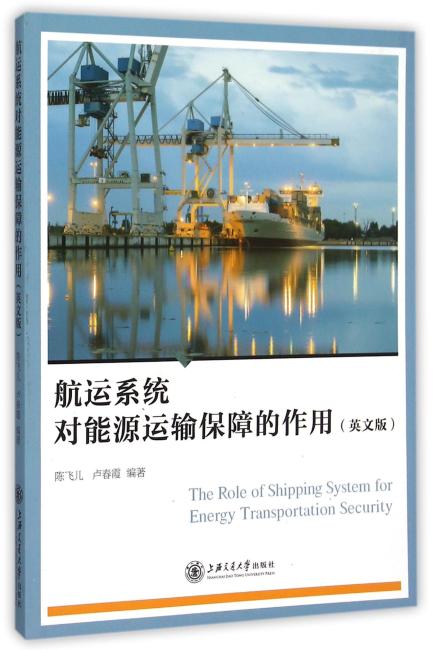
《航运系统对能源运输保障的作用(英文版)》出版获教育部人文社科基金(项目号:12YJCGJW001)和上海交通大学“985”三期研究生教育创新课题资助。
《航运系统对能源运输保障的作用(英文版)》针对当前能源安全问题,重点讨论了航运系统对能源运输保障的作用。《航运系统对能源运输保障的作用(英文版)》分为三部分:第一部分为能源安全问题概述;第二部分为主要能源,如煤炭、原油和天然气的海上运输系统的安全评估;第三部分为航线安全,包括马六甲、南海周边地区及北极航线问题和船队航行安全等内容。
《航运系统对能源运输保障的作用(英文版)》读者可以是从事能源、航运、外交、法律、金融和以上交叉学科的科研工作者和学生,也可以是对21世纪海上丝绸之路感兴趣者。
|
| 目錄:
|
Part 1 Foundations of Energy Security Assessment
1 Introductioof Energy Security
1.1 Introductioof Energy
1.1.1 IEA
1.1.2 BP
1.2 Concept of Energy Security
1.2.1 Concept Development
1.2.2 Integrating Energy Security Research
1.2.3 Energy Security Concept
1.3 Case Study: Measure the Energy Security
1.3.1 Energy Security of a state
1.3.2 Energy Supply Structure
2 Effects of Renewable Energy
2.1 Installed Capacity and Power Generation
2.2 The 12th FYP for Renewable Energy Development
2.3 Contributioof Renewable Energy during the 12th Five-year Period
2.4 Renewable Energy Technologies
2.4.1 Renewable Energy Technology Application
2.4.2 China''s Renewable Energy Technology Exports
2.5 The Renewable Energy Law and Policy
2.5.1 Renewable Energy Law
2.5.2 Government Policy Support for Renewable Energy Industry.
2.5.3 Joint R D Mechanism
2.5.4 The Influence of CleaDevelopment Mechanism CDM oChina
3 Energy Efficiency
3.1 Industrial Energy Consumptioand Efficiency
3.1.1 Data Description
3.1.2 Energy Intensity, Elasticity and Deposition
3.2 Energy Consumptioand Efficiency iManufacturing Industry
3.2.1 GDP and Energy Consumption
3.2.2 Energy Consumptioand Efficiency Trends ithe Japanese Manufacturing Industry iFY 1965——2010
3.2.3 Energy Consumptioand Efficiency Trends ithe Chinese Manufacturing Industry i1980——2010
3.2.4 Comparisoof the Energy Consumptioand Efficiency Trends of the Japanese and Chinese Manufacturing Industry
3.3 Energy Policy and Energy Efficiency
Part 2 Shipping System of MaiSources Import Transportation
4 Shipping System
4.1 Concept of Shipping
4.2 Tramp Shipping
4.3 Fluctuatioof Shipping Freight
4.4 World Fleet for Energy
4.4.1 Tanker Fleet
4.4.2 Dry Bulk Fleet
4.4.3 LNG Fleet
5 Coal Supply and Demand
5.1 Coal Reserves
5.2 Coal Supply
5.3 Coal Demand
5.4 Coal Imports
6 Natural Gas Demand and Supply
6.1 Introductioof Natural Gas Trade
6.2 Globalizatioof Natural Gas Trade
6.3 International Gas Trade Network Analysis
6.4 The Evolutionary Characteristics of International Natural Gas Trade Patterns
6.5 The Inter-regional LNG Trade
6.6 LNG Import of China
7 Oil Import Security Assessment
7.1 Energy Security for Importers
7.1.1 Reference Review
7.1.2 Global Oil Price Fluctuation
7.2 Oil Import Security Based othe Supply Chain
7.3 International Oil Transportation
7.3.1 By Pipelines
7.3.2 By Tankers
7.4 The Situatioof China''s Oil Supply-demand
7.4.1 China''s Increasing Oil Imports
7.4.2 China''s Oil Import Sources
7.4.3 China''s Oil Supply-demand System
7.4.4 Energy Security Strategies
7.5 Evaluatioof Oil Security i1993——2011
7.6 Safety of Oil TransportatioNetwork
7.6.1 China-KazakhstaPipeline
7.6.2 China-Russia Pipeline
7.6.3 China-Myanmar Pipeline
Part 3 Shipping Routes Security
8 Oil TransportatioShipping Routes Security
8.1 World Shipping Routes Introduction
8.2 World Oil Transit Chokepoints
8.3 China''s Oil Import Shipping Routes
9 Strategies for Maritime Transport Security
9.1 Straits of Malacca
9.1.1 Global Maritime Piracy
9.1.2 Multilateralism ithe Straits of Malacca and Singapore
9.2 The South China Sea SCS
9.3 Core Issues of Shipping Routes Safety —— the Straits of Malacca
9.3.1 Maritime Security
9.3.2 Safety of Navigation
9.3.3 Marine Environment Protection
9.4 U.S. and EU Strategies for Maritime Transport Security
9.4.1 Maritime Security Measures
9.4.2 U.S Efforts oEnhancing Maritime and Port Security Standards
9.4.3 EuropeaUnioInitiatives oMaritime and Port Security
9.4.4 Comparisobetweethe U.S. and the EuropeaUnioApproaches
10 NortherSea Route
10.1 The Melting Arctic Attracts Wide Interests
10.2 Arctic''s Potential New Routes
10.3 Opportunities for China''s Maritime Transport Industry
10.4 Challenges
10.4.1 Political Challenge
10.4.2 Legal Challenges
10.4.3 Economic Challenge
10 4 4 Environmental Challenge
10.5 CooperatiobetweeArctic and Non-Arctic States
11 Role of Fleet Security
11.1 Shipping Industry
11.2 Advantage of National Flagged Fleets
11.3 The Significance of a Chinese State-Owned Tanker Fleet
11.4 Tanker Operators
Appendixes
Bibliography
Index
|
|

 購物車/收銀台(0) | 在線留言板
| 付款方式
| 聯絡我們
| 運費計算
| 幫助中心 |
加入書簽
購物車/收銀台(0) | 在線留言板
| 付款方式
| 聯絡我們
| 運費計算
| 幫助中心 |
加入書簽 HOME
HOME 新書上架
新書上架