新書推薦:

《
心灵银行手账 : 创造真正改变的卓越系统 世界级催眠大师约翰·卡帕斯博士上世纪90年代收费75万美金
》
售價:NT$
347

《
档案中的虚构:16世纪法国的赦罪故事及故事的讲述者(人类学与新文化史研究经典力作)
》
售價:NT$
347

《
AI社会 : 智能改变世界的十个场景(在这场AI革命中,你是否正在把命运悄悄交给看不见的算法?)
》
售價:NT$
347

《
名侦探的咒缚(东野圭吾:反推理?推理,东野写不下去了吗?这就是答案!一本让人泪流满面的奇幻悬疑)
》
售價:NT$
281

《
亚历山大在世界尽头
》
售價:NT$
408

《
生命的法则(2026年版)
》
售價:NT$
561

《
守护我们终将衰退的大脑:阿尔茨海默病防治全书 (一线医生写给中国家庭的阿尔茨海默病防治指南)
》
售價:NT$
301

《
精准表达:一说就懂的四句沟通术
》
售價:NT$
305
|
| 編輯推薦: |
|
新世纪高等院校英语专业本科生系列教材(修订版)旨在打造完整的英语专业学科体系,全面促进学生的语言技能、学科素养和创新能力的培养,必将为我国培养国际化、创新型、高素质的英语专业人才奠定坚实的基础!
|
| 內容簡介: |
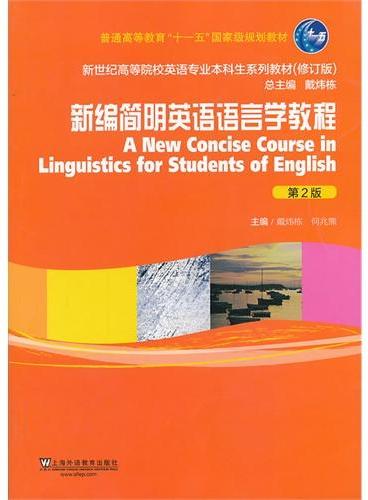
《新世纪高等院校英语专业本科生教材(修订版):新编简明英语语言学教程(第2版)》特色:
权威性和先进性的体现:
按照《高等学校英语专业英语教学大纲》提出的培养目标、课程设置、教学要求和教学原则精心设计,凝聚海内外英语专业教育界专家学者的智慧,反映英语专业教育、科研的最新成果。
前瞻性和创新性的结晶
基于广泛的市场调研、详尽的需求分析和严谨的科学判断,梳理现有教程,优化教材结构,更新教学方法和手段,强化学生综合能力的培养。
专业素质和人文素养的同步提升
专业技能、专业知识、相关专业知识的完美匹配,帮助学生打下扎实的语言基本功,增强其分析问题、解决问题的能力,提高专业素质和人文素养,使学生真正成为国际化、创新型、高素质的英语专业人才。
|
| 目錄:
|
Chapter1Introduction
1.1WhatIsLinguistics?
1.1.1Definition
1.1.2TheScopeOfLinguistics
1.1.3SomeImportantDistinctionsInLinguistics
1.2WhatIsLanguage?
1.2.1DefinitionsOfLanguage
1.2.2DesignFeaturesOfLanguage
1.2.3FunctionsOfLanguage
RevisionExercises
ForFurtherReading
Chapter2Phonology
2.1ThePhonicMediumOfLanguage
2.2Phonetics
2.2.1WhatIsPhonetics?
2.2.2OrgansOfSpeech
2.2.3OrthographicRepresentationOfSpeechSoundsBroadAndNarrowTranscriptions
2.2.4ClassificationOfEnglishSpeechSounds
2.3Phonology
2.3.1PhonologyAndPhonetics
2.3.2Phone,Phoneme,AndAllophone
2.3.3PhonemicContrast,ComplementaryDistribution,AndMinimalPair
2.3.4SomeRulesInPhonology
2.3.5SuprasegmentalFeatures——Stress,Tone,Intonation
RevisionExercises
ForFurtherReading
Chapter3Morphology
3.1Introduction
3.2OpenClassAndClosedClass
3.3Morphemes——TheMinimalUnitsOfMeaning
3.4AnalyzingWordStructures
3.5Derivationa!AndinflectionalMorphemes
3.6MorphologicalRulesOfWordFormation
3.7Derivation
3.8Compounds
RevisionExercises
ForFurtherReading
Chapter4Syntax
4.1WhatIsSyfitax?
4.2Categories
4.2.1Word-LevelCategories
4.2.2PhraseCategoriesAndTheirStructures
4.3PhraseStructureRule
4.3.1Xprule
4.3.2CoordinationRule
4.4PhraseElements
4.4.1Specifiers
4.4.2Complements
4.4.3Modifiers
4.5SentencesTheSRule
4.6Transformations
4.6.1AuxiliaryMovement
4.6.2DoInsertion
4.6.3DeepStructureAndSurfaceStructure
4.6.4WhMovement
4.6.5MoveAAndConstraintsOnTransformations
RevisionExercises
ForFurtherReading
Chapter5Semantics
5.1WhatIsSemantics?
5.2SomeViewsConcerningTheStudyOfMeaning
5.2.1TheNamingTheory
5.2.2TheConceptualistView
5.2.3Contextualism
5.2.4Behaviorism
5.3LexicalMeaning
5.3.1SenseandReference
5.3.2MajorSenseRelations
5.4SenseRelationsBetweenSentences
5.5AnalysisOfMeaning
5.5.1ComponentialAnalysis——AWayToAnalyzeLexicalMeaning
5.5.2PredicationAnalysis——AWayToAnalyzeSentenceMeaning
RevisionExercises
ForFurtherReading
Chapter6Pragmatics
6.1Som''eBasicNotions
6.1.1Definition
6.1.2PragmaticsVs.Semantics
6.1.3Context
6.1.4SentenceMeaningVs.UtteranceMeaning
6.2SpeechActTheory
6.2.1Austin''sModelOfSpeechActs
6.2.2Searle''sClassificationOfSpeechActs
6.2.3IndirectSpeechActs
6.3PrincipleOfConversation
6.4Cross-CulturalPragmaticFailure
RevisionExercises
ForFurtherReading
Chapter7LanguageChange
7.1Introduction
7.2PhonologicalChanges
7.3MorphologicalAndSyntacticChange
7.3.1AdclitionOfAffixes
7.3.2LossOfAffixes
7.3.3ChangeOfWordOrder
7.3.4ChangeInNegationRule
7.4Lexical''andSemanticChange
7.4.1AdditionOfNewWords
7.4.2LossOfWords
7.4.3SemanticChanges
7.5SomeRecentTrends
7.5.1MovingTowardsGreaterInformality
7.5.2TheInfluenceOfAmericanEnglish
7.5.3TheInfluenceOfSci.EnceAndTechnology
7.6TheCausesOfLanguageChange
RevisionExercises
ForFurtherReading
Chapter8LanguageAndSociety
8.1TheScopeOfSociolinguistics
8.1.1TheRelatednessBetweenLanguageAndSociety
8.1.2SpeechCommunityAndSpeechVariety
8.1.3TwoApproachesToSociolinguisticStudies
8.2VarietiesOfLanguage
8.2.1DialectalVarieties
8.2.2Register
8.2.3DegreeOfFormality
8.3StandardDialect
8.4PidginAndCreole
8.5BilingualismAndDiglosia
RevisionExercises
ForFurtherReading
Chapter9LanguageAndCulture
9.1Introduction
9.2WhatIsCulture?
9.3TheRelationshipBetweenLanguageAndCulture
9.4Sapir-WhorfHypothesis
9.5LinguisticEvidenceOfCulturalDifferences
9.5,1GreetingsAndTermsOfAddress
9.5.2GratitudeAndCompliments
9.5.3ColourWords
9.5.4PrivacyAndTaboos
9.5.5RoundingOffNumbers
9.5.6WordsAndCultural-SpecificConnotations
9.5.7Cultural-RelatedIdioms,ProverbsAndMetaphors
9.6CultureContact,CulturalOverlapAndDiffusion
9.7TheSignificanceOfCulturalTeachingAndLearning
9.8InterculturalCommunication
RevisionExercises
ForFurtherReading
Chapter10LanguageAcquisition
10.1Introduction
10.2TheoriesOfChildLanguageAcquisition
10.2.1ABehaviouristViewOfLanguageAcquisition
10.2.2AnInnatistViewOfLanguageAcquisition
10.2.3AnIriteractionistViewOfLanguageAcquisition
10.3CognitiveDevelopmentInChildLanguageDevelopment
10.4LanguageEnvironmentAndTheCriticalPeriodHypo-Thesis
10.5StagesInChildLanguageDevelopment
10.5.1PhonologicalDevelopment
10.5.2VocabularyDevelopment
10.5.3GrammaticalDevelopment
10.5.4PragmaticDevelopment
10.6AtypicalDevelopment
RevisionExercises
ForFurtherReading
Chapter11SecondLanguageAcquisition
11.1Introduction
11.2ConnectionsBetweenFirstLanguageAcquisitionAndSecondLanguageAcquisition
11.3ContrastiveAnalysis
11.4ErrorAnalysis
11.5Interlanguage
11.6TheRoleOfTheNativeLanguageInSecondLanguageLearning
11.7SecondLanguageLearningModelsAndInputHypothesis
11.8IndividualDifferences
11.9SecondLanguageAcquisitionAndItsPedagogicalImplications
RevisionExercises
ForFurtherReading
Chapter12LanguageAndTheBrain
12.1Introduction
12.2Neurolinguistics
12.2.1WhatIsNeurolinguistics?
12.2.2TheStructureAndFunctionOfTheHumanBrain
12.2.3MethodsForTheStudyOfTheBrainAndEvidencesForLateralization
12.2.4Aphasia
12.3Psycholinguistics
12.3.1WhatIsPsycholinguistics?
12.3.2PsycholinguisticResearchMethods
12.3.3LinguisticsAndLanguageProcessing
12.3.4PsycholinguisticModeling
RevisionExercises
ForFurtherReading
AGlossaryInEnglishAndChinese
References
|
|

 購物車/收銀台(0) | 在線留言板
| 付款方式
| 聯絡我們
| 運費計算
| 幫助中心 |
加入書簽
購物車/收銀台(0) | 在線留言板
| 付款方式
| 聯絡我們
| 運費計算
| 幫助中心 |
加入書簽 HOME
HOME 新書上架
新書上架