新書推薦:

《
文津书馆——历史的账簿:数量化中国古代经济简史
》
售價:NT$
366

《
中国社会经济史纲
》
售價:NT$
366

《
探索能源材料:赋能可持续未来
》
售價:NT$
1049
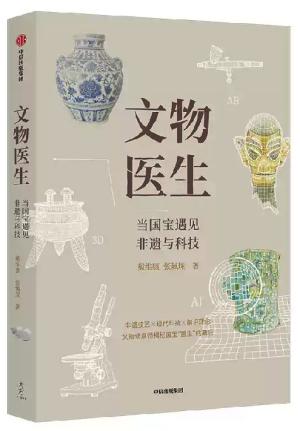
《
文物医生
》
售價:NT$
419

《
汗青堂丛书171·黄河:从大禹治水到人类世
》
售價:NT$
488

《
影子博弈
》
售價:NT$
466

《
第二天:金钱进化论
》
售價:NT$
413

《
镁铝尖晶石耐火材料:结构、性能与应用
》
售價:NT$
366
|
| 編輯推薦: |
《托福考试专项进阶 初级口语》属于“托福考试专项进阶”系列图书中的口语专项。书中详细剖析托福口语四类题型的备考技巧,每单元都配有丰富的练习题,书末提供两套托福口语模考题。
本书配有答案册,以“书中书”形式呈现,内容包括:所有练习题及模考题的答案、口语题目回答范例及译文、听力材料原文及译文。
书中全部听力材料及回答范例均配有音频,专业外教录制,地道美式发音。扫描封底的二维码或登录封底提供的链接即可免费获取音频文件。
本书内容相对较基础,属于托福口语入门级别的备考用书,适合托福考试初学者。该系列图书中另有“中级口语”和“高级口语”供更高学习水平的读者选择。
|
| 內容簡介: |
|
“托福考试专项进阶”系列丛书引进自韩国多乐园出版社,从托福考试所考查的听、说、读、写四项技能入手,为考生提供了详尽的考试指导,并将各技能分为初、中、高三级,通过独特的“进阶训练”方式,再辅以大量练习,让考生逐步掌握托福实考的技巧,切实提高英语实际运用能力,从而在短期内轻松取得托福高分。本丛书内容编排由易到难,循序渐进,实战性强,是不可多得的托福备考资料。
|
| 關於作者: |
米尔奇 (Arthur H. Milch):毕业于新泽西州立大学,教育学硕士。
麦考马克 (Denise McCormack):毕业于新泽西州立大学,语言学硕士。
斯瓦尼 (Jasmine C. Swaney):毕业于宾夕法尼亚大学,教育学硕士。
|
| 目錄:
|
Table of Contents
Introduction ................................................................................................ 4
How to Use This Book .............................................................................. 7
PART I Independent Speaking Task | Personal Preference .................... 9
UNIT 01 Education ................................................................................. 12
UNIT 02 Life I ........................................................................................... 16
UNIT 03 School I ..................................................................................... 20
UNIT 04 Multimedia ............................................................................... 24
UNIT 05 Life II .......................................................................................... 28
UNIT 06 School II .................................................................................... 32
PART II Integrated Speaking Task 1 | Reading & Conversation ........ 37
UNIT 07 School Facilities I .................................................................. 42
UNIT 08 Cafeterias & Computer Labs ............................................ 48
UNIT 09 School Events & Policies .................................................... 54
UNIT 10 School Systems ..................................................................... 60
UNIT 11 School Facilities II ................................................................. 66
UNIT 12 School Life .............................................................................. 72
PART III Integrated Speaking Task 2 | Reading & Lecture ................. 79
UNIT 13 Psychology I ........................................................................... 84
UNIT 14 Psychology II & Economics ............................................... 90
UNIT 15 Architecture & Arts ............................................................... 96
UNIT 16 Biology I ................................................................................ 102
UNIT 17 Business ................................................................................ 108
UNIT 18 Biology II ................................................................................ 114
PART IV Integrated Speaking Task 3 | Lecture .................................... 121
UNIT 19 Economics ............................................................................ 126
UNIT 20 Biology I ................................................................................. 132
UNIT 21 Psychology ........................................................................... 138
UNIT 22 Others .................................................................................... 144
UNIT 23 Biology II ................................................................................ 150
UNIT 24 Business ................................................................................ 156
Actual Test ....................................................................................... 163
Appendix ........................................................................................... 181
|
| 內容試閱:
|
Introduction
.
1.Information on the TOEFL iBT
A The Format of the TOEFL iBT
Section
Number of Questions or Tasks
Timing
Score
Reading
20 Questions
? 2 reading passages
? with 10 questions per passage
? approximately 700 words long each
35 Minutes
30 Points
Listening
28 Questions
? 2 conversations
? 5 questions per conversation
? 3 minutes each
? 3 lectures
? 6 questions per lecture
? 4?5 minutes each
36 Minutes
30 Points
Speaking
4 Tasks
? 1 independent speaking task
? 1 personal choice/opinion/experience
? preparation: 15 sec. / response: 45 sec.
? 2 integrated speaking tasks: Read-Listen-Speak
? 1 campus situation topic
reading: 90?115 words (45 sec.)
conversation: 150?180 words (60?80 sec.)
? 1 academic course topic
reading: 90?115 words (50 sec.)
lecture: 150?220 words (60?90 sec.)
? preparation: 30 sec. / response: 60 sec.
? 1 integrated speaking task: Listen-Speak
? 1 academic course topic
lecture: 230?280 words (90?120 sec.)
? preparation: 20 sec. / response: 60 sec.
16 Minutes
30 Points
Writing
2 Tasks
? 1 integrated writing task: Read-Listen-Write
? reading: 250?300 words (3 min.)
? lecture: 250?320 words (2 min.)
? a summary of 150?225 words (20 min.)
? 1 academic discussion task
? a minimum 100-word essay (10 min.)
30 Minutes
30 Points
B What Is New about the TOEFL iBT?
The TOEFLiBT is delivered through the Internet in secure test centers around the world at the same time.It tests all four language skills and is taken in the order of Reading, Listening, Speaking, and Writing.The test is about 2 hours long, and all of the four test sections will be completed in one day.Note taking is allowed throughout the entire test, including the Reading section. At the end of the test, all notes are collected and destroyed at the test center.In the Listening section, one lecture may be spoken with a British or Australian accent.There are integrated tasks requiring test takers to combine more than one language skill in the Speaking and Writing sections.In the Speaking section, test takers wear headphones and speak into a microphone when they respond.The responses are recorded and transmitted to ETS’s Online Scoring Network. In the Writing section, test takers must type their responses. Handwriting is not possible.Test scores will be reported online. Test takers can see their scores online 4?8 business days after the test and can also receive a copy of their score report by mail.
2.Information on the Speaking Section
The Speaking section of the TOEFL iBT measures test takers’ English speaking proficiency. This section takes approximately 16 minutes and has four questions. The first question is called Independent Speaking Task, and you will be asked to speak about a familiar topic based on your personal preference. The remaining three questions are Integrated Speaking Tasks, and you will be required to integrate different language skills—listening and speaking or listening, reading, and speaking.
A Types of Speaking Tasks
Task 1 Independent Speaking Task: Personal Preference
? This task will ask you to make and defend a personal choice between two possible opinions, actions, or situations. You should justify your choice with reasons and details.
? You will be given 15 seconds to prepare your answer and 45 seconds to say which of the two options you think is preferable.
Task 2 Integrated Speaking Task: Reading & Conversation
? This task will ask you to respond to a question based on what you have read and heard. You will first read a short passage presenting a campus-related issue and will then listen to a dialogue on the same topic. Then, you will be asked to summarize one speaker’s opinion within the context of the reading passage.
? You will be given 30 seconds to prepare your answer and 60 seconds to speak on the question. You should be careful not to express your own opinion in your response.
Task 3 Integrated Speaking Task: Reading & Lecture
? This task also asks you to respond to a question based on what you have read and heard. You will first read a short passage about an academic subject and will then listen to an excerpt from a lecture on that subject. Then, you will be asked to combine and convey important information from both the reading passage and the lecture.
? You will be given 30 seconds to prepare your answer and 60 seconds to speak on the question.
Task 4 Integrated Speaking Task: Lecture
? In this task, you will first listen to an excerpt from a lecture that explains a term or concept and gives some examples to illustrate it. Then, you will be asked to summarize the lecture and explain how the examples are connected with the overall topic.
? You will be given 20 seconds to prepare your answer and 60 seconds to respond to the question.
B Types of Speaking Topics
Personal Experience and Preference
? The question in Task 1 will be about everyday issues of general interest to test takers. For example, a question may ask about a preference between studying at home and at the library, a preference between living in a dormitory and an off-campus apartment, or a preference between a class with a lot of discussion and one without discussion.
Campus Situations
? The question in Task 2 will be about campus-related issues. For example, a question may ask about a university policy, rule, or procedure, future university plans, campus facilities, or the quality of life on campus.
Academic Course Content
? The question in Task 3 will be about academic subjects. For example, a question may ask about a life science, a social science, a physical science, or a topic in the humanities like animal domestication or economics.
? The question in Task 4 will also be about academic-related topics. For example, a question may ask about a process, a method, a theory, an idea, or a phenomenon of any type in fields like natural science, social science, or psychology.
C Important Features of Evaluation
Delivery
Delivery means how clear your speech is. In order to get good grades on the speaking tasks, you should speak smoothly and clearly, have good pronunciation, pace yourself naturally, and have natural-sounding intonation patterns.
Language Use
Language use is about the effectiveness of your use of grammar and vocabulary to express your ideas. In order to get good grades on the speaking tasks, you should be able to use both basic and more complex language structures and choose the appropriate words.
Topic Development
Topic development is related to how fully you respond to the question and how coherently you give your ideas. In order to get good grades on the speaking test, you should make sure that the relationship between your ideas and your progression from one idea to the next is clear and easy to follow.
|
|

 購物車/收銀台(0) | 在線留言板
| 付款方式
| 聯絡我們
| 運費計算
| 幫助中心 |
加入書簽
購物車/收銀台(0) | 在線留言板
| 付款方式
| 聯絡我們
| 運費計算
| 幫助中心 |
加入書簽 HOME
HOME 新書上架
新書上架



