新書推薦:
《
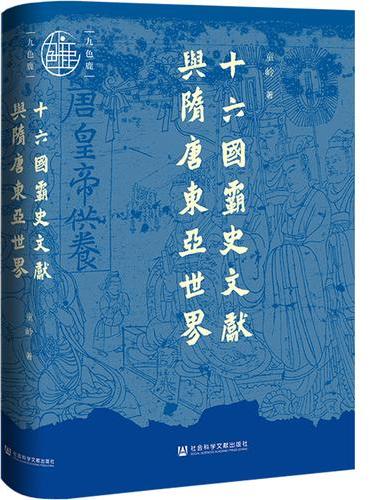
九色鹿·十六国霸史文献与隋唐东亚世界
》
售價:NT$
683

《
元代的族群文化与科举(精)--中华学术·有道
》
售價:NT$
519
《
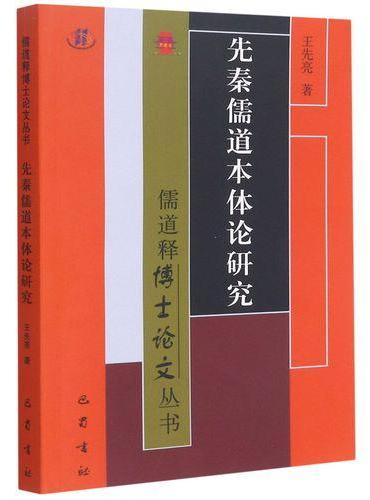
先秦儒道本体论研究
》
售價:NT$
281

《
初识数据科学
》
售價:NT$
996

《
吴越归宋——从混乱到太平的传奇
》
售價:NT$
519

《
孙人和文存
》
售價:NT$
784

《
南方丝绸之路史
》
售價:NT$
519
《
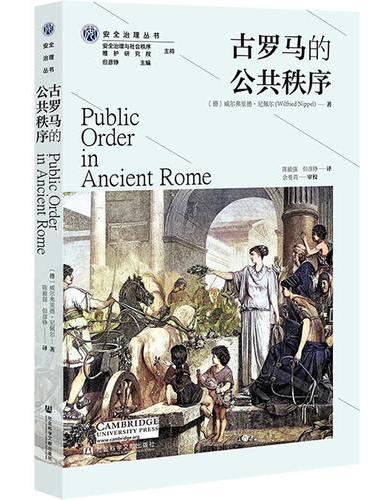
古罗马的公共秩序
》
售價:NT$
472
|
| 編輯推薦: |
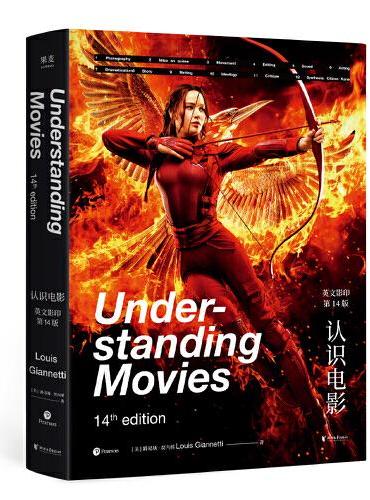
◆ 长销40年的经典电影入门书,北京电影学院、浙江大学研究生推荐阅读书目,出版以来备受电影人、学生和影迷喜爱
◆ 升级修订第14版,增补修订约100页内容,如新增对CGI、动作捕捉、类型电影、商业大片、电影明星等影视产业前沿话题的探讨,以及增补替换了近百部2000年后的新电影案例,如《星际穿越》《少年派的奇幻漂流》等
◆ 摄影、调度、剪辑、声音、表演、故事……用专业而简明易懂的方式介绍电影的方方面面,一本书窥探电影世界全貌;侧光、长焦、蒙太奇、荷兰式镜头、次文本……快速充能专业知识,评论电影不再只说“牛牛牛”
◆ 英文原文影印,还原原版排版设计,原汁原味品味大师笔触,珍藏之选
|
| 內容簡介: |
本书为长销40年的经典电影入门书《认识电影》第14次修订版。自问世以来,《认识电影》已被翻译为十几种语言,深受全球读者和电影行业专业人士认可。
《认识电影》从电影理论的典型视角出发,辅以大量电影片例,简明扼要地评论了电影艺术的方方面面。全书围绕电影制作核心要素组织结构,共分十二章,收录超500幅精美电影剧照和图片,章后附有延伸阅读,书末缀有重要词汇表和影片图例。作者以鞭辟入里的分析、新颖独到的见解和纷繁多样的视觉冲击,呈现给读者一个丰富多姿的电影世界。
升级第14版修订增补了近100页内容:一、增添了对CGI、动作捕捉等当下电影前沿制作技术的阐述分析;二、更多对经典电影和好莱坞黄金时代电影的探讨,如《春闺风月》《费城故事》;三、更多对当代电影明星(詹妮弗·劳伦斯、汤姆·克鲁斯等)的讨论;四、更多对类型电影和商业大片的讨论,如《银河护卫队》《侏罗纪世界》等;五、增补替换了近百部2000年后的新电影案例,如《星际穿越》《少年派的奇幻漂流》等
|
| 關於作者: |
作者 | 路易斯·贾内梯(Louis Giannetti)
电影人、影评人、电影理论家,美国克利夫兰凯斯西储大学荣誉教授,并于艾奥瓦大学和埃默里大学任教,教授电影、文学、戏剧、写作等人文课程。出版过多部雅俗共赏的作品,内容涵盖政论、文学和戏剧,代表作有《认识电影》《美国电影大师》《闪回:电影简史》《戈达尔及其他:电影形式论文集》等。
目前他与两个女儿居住于俄亥俄州夏克海茨市,闲暇时以打理日式花园为乐。
|
| 目錄:
|
Preface
Acknowledgments
Chapter 1 PHOTOGRAPHY
Realism and Formalism
The Shots
The Angles
Light and Dark
Color
Lenses, Filters, and Stocks
The Digital Revolution
The Cinematographer
Further Reading
Chapter 2 MISE EN SC?NE
Composition and Design
Territorial Space
Proxemic Patterns
Open and Closed Forms
Further Reading
Chapter 3 MOVEMENT
The Moving Camera
Mechanical Distortions of Movement
Further Reading
Chapter 4 EDITING
Continuity
D. W. Griffith and Classical Cutting
Soviet Montage and the Formalist Tradition
André Bazin and the Tradition of Realism
Further Reading
Chapter 5 SOUND
Historical Background
Sound Effects
Music
Musicals
Spoken Language
Further Reading
Chapter 6 ACTING
Stage and Screen Acting
The American Star System
Styles of Acting
Casting
Further Reading
Chapter 7 DRAMATIZATION
Time, Space, and Language
The Director
Settings and Décor
Costumes and Makeup
Further Reading
Chapter 8 STORY
Narratology
The Spectator
The Classical Paradigm
Realistic Narratives
Formalistic Narratives
Nonfictional Narratives
Genre and Myth
Further Reading
Chapter 9 WRITING
The Screenwriter
The Screenplay
North by Northwest:he Screenplay
Figurative Comparisons
Point of View
Literary Adaptations
Further Reading
Chapter 10 IDEOLOGY
The Left-Center-Right Model
Culture, Religion, and Ethnicity
Feminism
Queer Cinema
Tone
Further Reading
Chapter 11 CRITIQUE
Theories of Realism
Formalist Film Theories
The Auteur Theory
Eclectic and Synthesizing Approaches
Structuralism and Semiology
Historiography
Further Reading
Chapter 12 SYNTHESIS: Citizen Kane
Photography
Mise en Scène
Movement
Editing
Sound
Acting
Dramatization
Story
Writing
Ideology
Critique
Further Reading
Glossary
Text Credits
Index
|
| 內容試閱:
|
Realism and Formalism
Even before 1900, movies began to develop in two major directions: the realistic and the formalistic. In the mid?1890s in France, the Lumi?re brothers delighted audiences with their short movies dealing with everyday occurrences. Such films as The Arrival of a Train (see 4-4a) fascinated viewers precisely because they seemed to capture the flux and spontaneity of events as they were viewed in real life. At about the same time, Georges Méliès (pronounced mel-yez) was creating a number of fantasy films that emphasized purely imagined events. Such movies as A Trip to the Moon (see 4-4b) were typical mixtures of whimsical narrative and trick photography. In many respects, the Lumières can be regarded as the founders of the realist tradition of cinema, and Méliès of the formalist tradition.
Realism and formalism are general rather than absolute terms. When used to suggest a tendency toward either polarity, such labels can be helpful, but in the end they‘re just labels. Few films are exclusively formalist in style, and fewer yet are completely realist. There is also an important difference between realism and reality, although this distinction is often forgotten. Realism is a particular style, whereas physical reality is the source of all the raw materials of film, both realistic and formalistic. Virtually all movie directors go to the photographable world for their subject matter, but what they do with this material-how they shape and manipulate it-is what determines their stylistic emphasis.
Generally speaking, realistic films attempt to reproduce the surface of reality with a minimum of distortion. In photographing objects and events, the filmmaker tries to suggest the richness of life itself. Both realist and formalist film directors must select(and hence, emphasize)certain details from the chaotic sprawl of reality. But the element of selectivity in realistic films is less obvious. Realists, in short, try to preserve the illusion that their film world is unmanipulated, an objective mirror of the actual world. Formalists, on the other hand, make no such pretense. They deliberately stylize and distort their raw materials so that no one would mistake a manipulated image of an object or event for the real thing. The stylization calls attention to itself: It’s part of the show.
We rarely notice the style in a realistic movie because the artist tends to be self-effacing, invisible. Such filmmakers are more concerned with what‘s being shown rather than how it’s manipulated. The camera is used conservatively. It‘s essentially a recording mechanism that reproduces the surface of tangible objects with as little commentary as possible. Some realists aim for a rough look in their images, one that doesn’t prettify the materials with a self-conscious beauty of form. ”If it‘s too pretty, it’s false,” is an implicit assumption. A high premium is placed on simplicity, spontaneity, and directness. This is not to suggest that these movies lack artistry, however, for at its best, the realistic cinema specializes in art that conceals its artistry.
Formalist movies are stylistically flamboyant. Their directors are concerned with expressing their subjective experience of reality, not how other people might see it. Formalists are often referred to as expressionists, because their self-expression is at least as important as the subject matter itself. Expressionists are often concerned with spiritual and psychological truths, which they feel can be conveyed best by distorting the surface of the material world. The camera is used as a method of commenting on the subject matter, a way of emphasizing its essential rather than its objective nature. Formalist movies have a high degree of manipulation, a stylization of reality.
|
|

 購物車/收銀台(0) | 在線留言板
| 付款方式
| 聯絡我們
| 運費計算
| 幫助中心 |
加入書簽
購物車/收銀台(0) | 在線留言板
| 付款方式
| 聯絡我們
| 運費計算
| 幫助中心 |
加入書簽 HOME
HOME 新書上架
新書上架